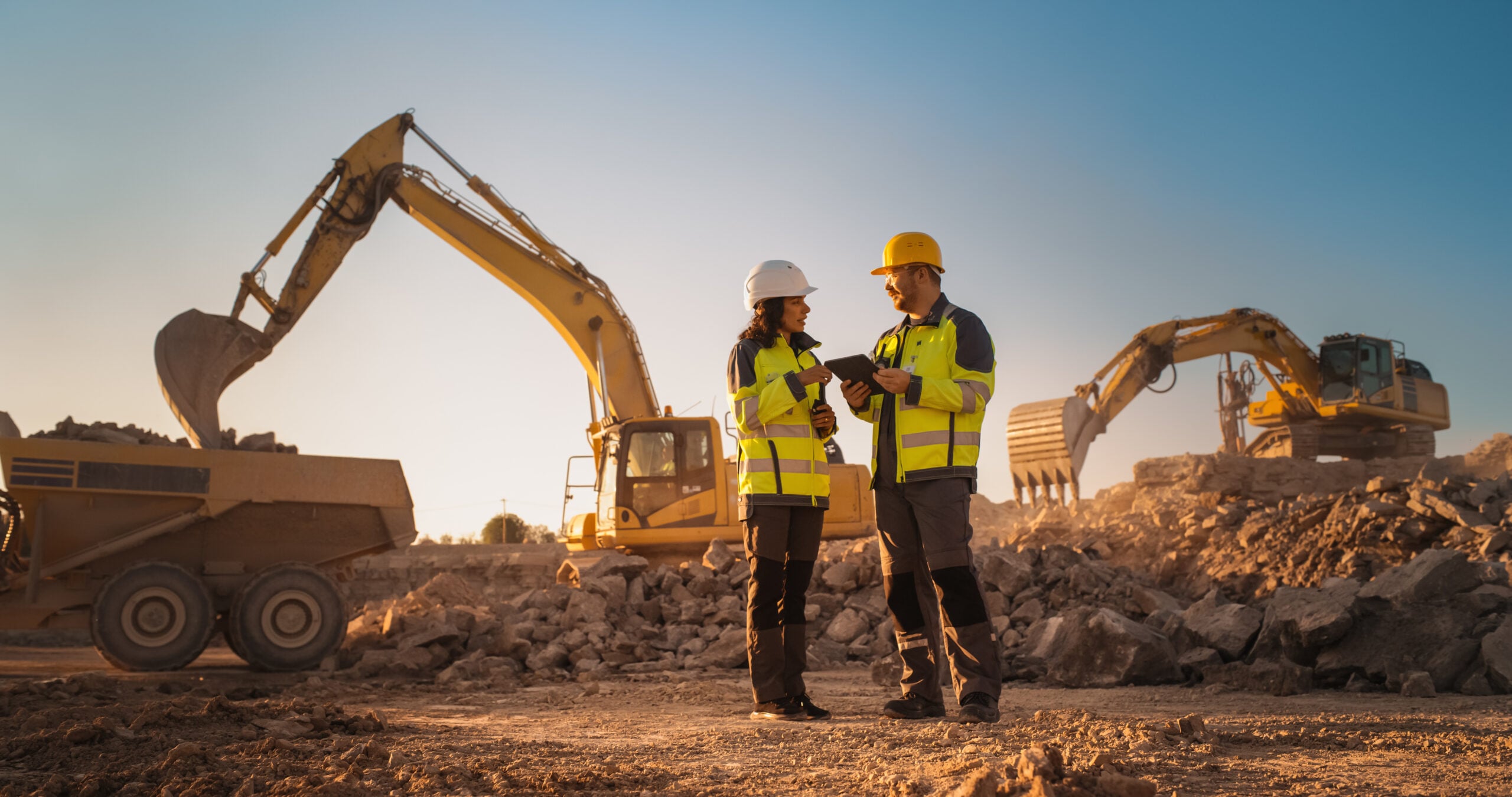
Construction equipment finance lets a building or groundworks business spread the cost of plant like excavators, dumpers and rollers over fixed monthly payments. Hire purchase means you own the machine at the end. Lease hire and contract hire mean you hand it back or keep renting. Most options work for new and used kit.
Key takeaways
- With hire purchase you own the machine once the final payment is made. With lease hire or contract hire, it never becomes yours.
- On hire purchase you can claim capital allowances on the payments once the machine is in use, but not on the interest.
- The Annual Investment Allowance lets most businesses deduct up to £1 million a year of plant and machinery spending from profits.
- Limited companies can claim full expensing, a 100% deduction with no cap, on new and unused plant.
- On hire purchase, VAT is charged on the full price at the start. On lease hire, VAT is added to each payment instead.
- Lifting equipment needs a LOLER thorough examination at least every 12 months, and lifting accessories every 6 months.
Contents
- What it is and what it covers
- Types of finance for plant and machinery
- Can you finance used construction equipment?
- What does plant finance cost?
- Tax relief and VAT on financed plant
- Costs beyond the monthly payment
- How to apply
- Is construction plant finance regulated?
- Frequently asked questions
- Get a quote
- About the author
What is construction equipment finance?
Construction equipment finance is a way to pay for plant and machinery in monthly instalments, with the machine itself acting as the lender’s security. You get the kit on site now and pay for it while it earns its keep.
It covers excavators and mini diggers, backhoe loaders, dump trucks, compactors and rollers. It also covers support kit like forklifts, welfare cabins and portable traffic lights. The machine’s age, hours and resale value all shape the deal you’re offered.
Outside Finance is a specialist UK finance broker based near Evesham in Worcestershire. Most of the construction deals we arrange are for mini diggers, dumpers and rollers bought by small groundworks firms and sole traders. They want to own the machine without tying up their cash. You can see the kit we fund on our construction finance page.

Types of finance for plant and machinery
Construction machinery finance comes in five main types. The biggest question is whether you want to own the machine at the end, because that decides between buying and renting.
Hire purchase
You pay a deposit, then fixed monthly payments, and the machine is yours after the last one. You cover servicing and repairs. Hire purchase for construction equipment suits contractors who keep machines for years.
Lease hire
The lender owns the machine and you pay a fixed rental after a deposit. VAT is added to each payment rather than paid upfront. At the end you hand it back or keep renting. See our lease hire page.
Contract hire
You pay a fixed monthly amount that includes maintenance, then hand the machine back. Contract hire suits kit you need for a set period and don’t want to resell.
Business loans and refinance
A business loan can fund kit that doesn’t suit hire purchase. If you already own machines outright, hire purchase back releases cash from them while you keep using them.
| Hire purchase | Lease hire | Contract hire | Business loan | |
|---|---|---|---|---|
| Do you own it at the end? | Yes, after the final payment | No | No | Yes, from the start |
| VAT | Charged on the full value at the start | Added to each payment | Added to each payment | Paid to the seller when you buy |
| Servicing and repairs | Your responsibility | Your responsibility | Included | Your responsibility |
| Who claims capital allowances | You (not on the interest) | Usually the lender; your rentals are a business expense | Usually the lender; your rentals are a business expense | You |
| End of term | Machine is yours | Return it or keep renting | Return it | Machine is already yours |
Sources: Outside Finance financial solutions, GOV.UK Annual Investment Allowance, NI Business Info: tax relief on buying or leasing assets. As of October 2026.
Can you finance used construction equipment?
Yes. Used excavator finance and used mini digger finance are both common. The deal depends on the machine’s age, hours and condition more than on it being new.
In our experience, lenders on our panel will usually look at used plant up to around 8 to 10 years old. They’ll want sensible hours and a service history. Older machines can still be funded, but the term may be shorter.
One tax point to watch: full expensing and the new 40% first-year allowance only cover new and unused plant. The Annual Investment Allowance doesn’t exclude used kit, so most smaller buyers lose nothing.
Before you commit to a used machine, check these:
- Full service history and the hour meter reading
- The last LOLER report, if the machine is used for lifting
- That the seller owns it outright and there’s no finance still owed on it
- Serial number matches the paperwork

What does plant finance cost?
The cost depends on four things: the price of the machine, your deposit, the term and the rate you’re offered. A longer term gives a lower monthly payment but more interest in total.
Here’s a worked example for a £40,000 machine (before VAT) with a 10% deposit. That leaves £36,000 financed at an illustrative fixed rate of 9% a year.
| Term | Monthly payment | Total repaid | Total interest |
|---|---|---|---|
| 3 years (36 months) | £1,144.79 | £41,212 | £5,212 |
| 4 years (48 months) | £895.86 | £43,001 | £7,001 |
| 5 years (60 months) | £747.30 | £44,838 | £8,838 |
Source: illustrative calculation using a standard repayment formula, as of October 2026. This is not a quote. Your actual rate, fees and VAT will change the figures. Finance is available subject to status.
Most contractors we work with match the term to how long they’ll keep the machine, often three to five years. Watch for documentation fees, a balloon payment at the end and early settlement charges, as they all change the total cost.
Found a machine? Send us the dealer’s quote and we’ll come back with options from our panel of lenders. Get a free quote.
Tax relief and VAT on financed plant
Most construction plant qualifies for capital allowances, so you can take some or all of its cost off your taxable profits. How much depends on the type of finance and whether you trade as a limited company.
On hire purchase, HMRC guidance on GOV.UK says you can claim for the payments under the contract once you start using the item, but not for the interest. On lease hire and contract hire, the lender usually claims and your rentals count as a business expense.
The rules changed in 2026. A new 40% first-year allowance started on 1 January 2026 for sole traders and partnerships as well as companies. The main writing down allowance fell from 18% to 14%.
| Allowance | Rate | Who can claim | Key condition |
|---|---|---|---|
| Annual Investment Allowance | 100%, up to £1 million a year | Sole traders, partnerships of individuals, limited companies | Not cars |
| Full expensing | 100%, no cap | Limited companies only | New and unused, not cars |
| 50% first-year allowance | 50% | Limited companies only | New and unused special rate assets |
| New first-year allowance | 40% | All businesses, including unincorporated and leasing businesses | Expenditure from 1 January 2026; new main rate assets, not second-hand, not cars |
| Main rate writing down allowance | 14% a year (was 18%) | All businesses | From 1 April 2026 (Corporation Tax), 6 April 2026 (Income Tax) |
| Special rate writing down allowance | 6% a year | All businesses | Unchanged |
Sources: GOV.UK Annual Investment Allowance, GOV.UK full expensing, HM Treasury policy paper, 26 November 2025. As of October 2026.
VAT differs too: on hire purchase it’s charged on the full value at the start, and on a lease it’s paid with each rental. Tax is where construction equipment finance options differ most, so check with your accountant before you sign.

Costs beyond the monthly payment
The finance payment isn’t the only cost of running plant. Inspections, servicing and Construction Industry Scheme deductions all affect what you can comfortably afford each month.
If a machine is used for lifting, the Lifting Operations and Lifting Equipment Regulations 1998 (LOLER) apply, and the employer or self-employed user must arrange thorough examinations. Under the Construction Industry Scheme, contractors deduct tax from a subcontractor’s payments. Budget your finance payment around what lands in your account, not the invoice total.
| Cost or rule | What it means | How often |
|---|---|---|
| LOLER thorough examination: lifting equipment | Examined and reported on by a competent person | At least every 12 months |
| LOLER thorough examination: equipment that lifts people, and all lifting accessories | Examined and reported on by a competent person | At least every 6 months |
| CIS deduction: registered subcontractor | 20% taken from your payments | Every payment |
| CIS deduction: not registered | 30% taken from your payments | Every payment |
| CIS gross payment status | No deduction taken | Every payment |
| Servicing on hire purchase and lease hire | Your cost, to manufacturer warranty standards | As per the service schedule |
Sources: HSE thorough examination of lifting equipment, GOV.UK CIS for subcontractors, Outside Finance financial solutions. As of October 2026.
How to apply for construction equipment finance
Choose the machine, gather your paperwork, then let a broker or lender check what you’re eligible for. A broker can check one application against several lenders.
- Find the machine. Get a written quote from the dealer or seller. For used kit, ask for the serial number, year and hours.
- Decide if you want to own it. That tells you whether hire purchase or a lease suits you better.
- Pick a deposit and term. Choose a monthly payment you can still make after CIS deductions and in quiet months.
- Gather your documents. We’ll usually ask for recent accounts or tax returns and a few months of business bank statements. We’ll also need ID for the owners or directors.
- Send it to a broker. Outside Finance checks your deal against several carefully selected lenders, so you don’t have to apply to each one.
- Read the agreement. Check the rate, any fees, any balloon payment, early settlement terms and the insurance you’ll need.
- Sign and take delivery. You pay the deposit, the lender pays the supplier, and the machine goes to site.
If you’re adding vans or trucks too, our commercial vehicle finance team can look at the whole package.
Is construction plant finance regulated?
Most plant finance taken out by limited companies isn’t regulated by the Financial Conduct Authority. Some smaller agreements for sole traders and partnerships can be, which gives the borrower extra protection.
The rules turn on the amount and the purpose. Under article 60C of the Regulated Activities Order, business credit over £25,000 is exempt when it’s wholly or mainly for business use. Below that amount, an agreement with a sole trader or small partnership may be regulated.
Outside Finance Limited is authorised and regulated by the Financial Conduct Authority, FRN 949872. Outside Finance Ltd acts as a credit broker and not a lender. Please note, we conduct both regulated and unregulated business and therefore not all products provided through us are regulated by the Financial Conduct Authority.
We don’t charge you a fee. The lender pays us commission, and that commission doesn’t change the interest rate you pay.
Frequently asked questions
How much deposit do you need for digger finance?
It depends on the lender, the machine and your trading history. Many contractors put down around 10%, and some lenders will go lower for strong applicants. On hire purchase, remember the VAT on the full price is usually due at the start, so budget for that alongside the deposit.
Can a new business get construction plant finance?
Yes, but lenders will look harder at the deal. They’ll weigh up your experience in the trade, your deposit and the machine itself. A larger deposit, a newer machine or a personal guarantee from the owner can all help a new business get approved for funding.
What credit score do you need to finance construction equipment?
There’s no single minimum score. Lenders look at your business and personal credit files, your accounts and how long you’ve traded. A few missed payments in the past won’t always stop you, but they can mean a bigger deposit, a shorter term or a higher rate.
Will I own the digger at the end?
You will on hire purchase, once the final payment is made. On lease hire and contract hire the machine stays with the lender, and you hand it back or keep renting at the end. If owning the machine matters to you, hire purchase or a business loan is the right choice.
Can I repay plant machinery finance early?
Usually, yes. Most hire purchase agreements let you settle early, but there may be a settlement charge and you might not save all of the remaining interest. Ask for the early settlement terms before you sign, so you know the cost if a big contract pays out sooner than expected.
Is it better to lease or buy construction equipment?
Buy, usually on hire purchase, if you’ll keep the machine for years and want to claim capital allowances. Lease if you want lower upfront costs, VAT spread across payments and the option to hand it back. Contract hire suits kit you only need for a set period with maintenance included.
What documents do I need to apply for plant finance?
Most lenders ask for your latest accounts or tax returns and recent business bank statements. They’ll also want ID for the owners or directors and a written quote for the machine. Having these ready before you apply usually means a faster decision and fewer follow up questions.
Can I claim capital allowances on financed plant?
On hire purchase, yes. You can claim on the payments under the contract once the machine is in use, but not on the interest. Most businesses can use the £1 million Annual Investment Allowance. On lease hire, the lender normally claims and your rentals are treated as a business expense instead.
Get a quote
Talk to us about construction equipment finance for your next machine. Call us on 0345 222 1970, email info@outsidefinance.co.uk or request a free quote online. Finance is available subject to status. Terms and conditions apply.
About the author
This guide was written by the team at Outside Finance, a specialist UK finance broker based in Hinton on the Green, near Evesham in Worcestershire. The team has over 27 years of collective experience and a proven track record in agriculture, golf and construction. It has financed £25 million to industry and served 250 clients. See also our guide to golf course equipment finance for groundcare machinery.