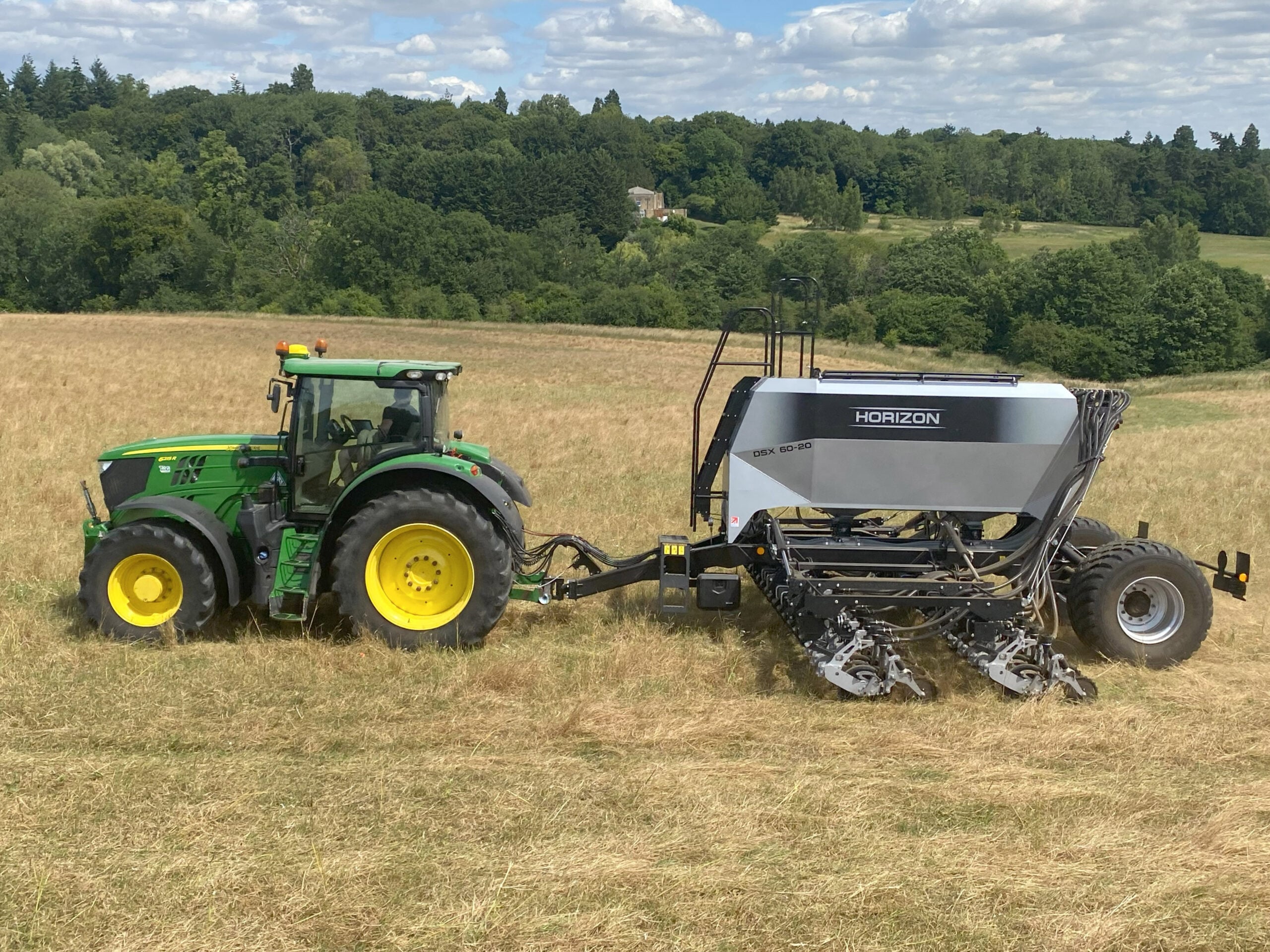
Quick answer: In UK law, agricultural use means land or buildings used for farming activities set out in statute, principally section 336(1) of the Town and Country Planning Act 1990. It covers crops, horticulture, dairying, livestock, grazing, market gardens and ancillary woodland. It does not automatically cover storage, livery, tourism or recreation.
Ask ten people around a market table what is agricultural use and you’ll get ten sensible-sounding answers, most of which are wrong in at least one respect. “It’s a farm, so it’s agricultural.” “We’ve always used that shed for the tractor, so it’s agricultural.” “The horses eat the grass, so it’s grazing.”
The problem is that “agricultural” is not a general description in law. It is a defined term, and it is defined more than once, in slightly different ways, for different purposes. A field can be agricultural for planning and non-agricultural for inheritance tax. A barn can be exempt from business rates one year and rated the next, without a brick moving. That gap between what feels agricultural and what qualifies as agricultural is where most disputes, refused applications and unexpected tax bills begin.
What Is Agricultural Use in UK Law?
There is no single definition. There is a family of them, and they mostly trace back to the same post-war roots.
The planning definition: section 336, Town and Country Planning Act 1990
For anything to do with planning permission, permitted development, occupancy conditions or enforcement, section 336(1) of the Town and Country Planning Act 1990 is the reference point. It defines agriculture to include:
- Horticulture, fruit growing and seed growing
- Dairy farming
- The breeding and keeping of livestock, including creatures kept for food, wool, skins or fur, or for use in farming the land
- The use of land as grazing land, meadow land or osier land
- Market gardens and nursery grounds
- Woodland, but only where that use is ancillary to farming the land for other agricultural purposes
Two features of this list catch people out. First, it is inclusive rather than exhaustive, so the courts have had to fill gaps. Second, it says nothing about whether you make money. There is no profit test and no minimum acreage in section 336.
The farming definition: Agriculture Act 1947
The other lineage comes from the Agriculture Act 1947, which much later legislation borrows from, including the Agricultural Holdings Act 1986. Section 109 defines agriculture in broadly similar terms, but it adds something important when defining agricultural land: the land must be used for agriculture for the purposes of a trade or business.
That single phrase does a lot of work. It is why a few sheep kept as pets on a paddock can be agricultural for planning purposes and still fail the tests that matter for tenancy protection, permitted development rights and tax relief.
How the Definition Changes Depending on What You’re Asking
This is the table I wish someone had put in front of me the first time I tried to unpick a client file. Same land, four regimes, four slightly different questions.
| Regime | Key definition | Is a “trade or business” needed? | What turns on it |
|---|---|---|---|
| Planning | s.336(1) Town and Country Planning Act 1990 | No, for the meaning of agriculture itself | Whether a change of use needs permission; enforcement risk; lawful use |
| Permitted development (Part 6, GPDO) | s.336 definition plus qualifying agricultural unit | Yes, land must be used for agriculture as part of a trade or business | Whether you can erect or extend a farm building without a full application |
| Tenancies (AHA 1986 / farm business tenancies) | Agriculture Act 1947 s.109 | Yes | Security of tenure, succession rights, rent review mechanics |
| Inheritance tax (APR) | IHTA 1984 s.115, plus occupation tests in s.117 | Effectively yes, occupation must be for the purposes of agriculture | Whether relief applies at all, and at what agricultural value |
| Business rates | Sch. 5 Local Government Finance Act 1988 | Buildings must be used solely in connection with agricultural operations | Full exemption versus a rateable assessment |
The practical takeaway: never answer “is this agricultural?” in the abstract. Always ask “agricultural for what purpose?”
What Counts as Agricultural Use, and What Doesn’t
Usually agricultural
- Growing combinable crops, roots, vegetables, fruit and flowers
- Grazing cattle, sheep, pigs, goats and poultry
- Dairying, including the parlour and associated buildings
- Storing feed, bedding, fertiliser and machinery used on that holding
- Nursery grounds and market gardens
- Woodland planted and managed as part of the wider farming operation
Usually not agricultural
- Storing caravans, boats, plant or third-party goods
- Livery yards, riding schools, arenas and cross-country courses
- Farm shops selling significant volumes of bought-in goods
- Wedding venues, glamping, holiday lets and events
- Kennels, catteries and dog day-care
- Contracting or haulage businesses run from farm buildings
- Keeping animals purely as pets or for personal recreation
The genuinely uncertain middle
- Anaerobic digestion and on-farm renewables, which depend heavily on feedstock and end use
- Processing and packing, which can shift from ancillary to a separate commercial use once bought-in produce dominates
- Environmental schemes, rewilding and biodiversity net gain land, where the farming activity may reduce or stop altogether
- Horses, which deserve their own section
The Horse Question: Grazing Versus Keeping
If there’s one grey area that generates more enforcement notices than any other, it’s equines.
The leading authority is Sykes v Secretary of State for the Environment [1981]. The court accepted that grazing land is agricultural even where the animals grazing it are recreational rather than working horses, because the statutory wording about grazing land isn’t limited to farm animals in the way the livestock wording is. Grazing horses can therefore be an agricultural use.
But the judgment came with a condition that gets forgotten. Grazing has to be the predominant purpose. Incidental nibbling by horses that are fed from bags and buckets is not grazing. In practice, planning officers look at the whole picture:
- Feeding. If supplementary feed is doing most of the work, the land is being used to keep horses, not to graze them.
- Activity. Riding, schooling and jumping in the field point towards recreation.
- Structures. Arenas, permanent shelters, jumps and hard standing all signal an equestrian use.
- Rugging and management. Intensive day-to-day care suggests keeping rather than grazing.
Cross the line and you have a material change of use from agricultural to equestrian, which needs planning permission. Get it wrong and you may also have broken an agricultural occupancy condition on the farmhouse without realising it.
Agricultural, equestrian or commercial? A quick comparison
| Factor | Agricultural use | Equestrian use | Diversified commercial use |
|---|---|---|---|
| Typical activity | Grazing, cropping, livestock rearing | Livery, schooling, competition horses | Storage, tourism, events, retail |
| Planning permission for change of use | Not needed if already agricultural | Usually needed | Almost always needed |
| Part 6 permitted development | Available on qualifying units | Not available | Not available |
| Business rates | Often exempt | Generally rateable | Rateable |
| Agricultural property relief | Potentially available | Only limited cases, such as stud farms | Not available under APR |
| Lender treatment | Agricultural or rural mortgage terms | Specialist lending, narrower market | Commercial terms, often lower loan-to-value |
Why the Legal Definition Matters More Than You Think
Planning and permitted development rights
Part 6 of the GPDO gives farms significant freedoms, but only on qualifying units. Class A applies to agricultural units of five hectares or more, with a ground area cap of 1,500 square metres for most buildings following the May 2024 amendments, and 1,000 square metres for livestock buildings. Class B covers smaller units between 0.4 and five hectares and does not permit new buildings at all. Both require the land to be used for agriculture as part of a trade or business. If the farming has quietly wound down, the rights can go with it.
The same logic runs through Class Q (agricultural buildings to dwellings) and Class R (agricultural buildings to flexible commercial use, now up to 1,000 square metres). Both depend on the building having been in genuine agricultural use as part of an established unit at the relevant date.
Agricultural occupancy conditions
A typical agricultural tie limits occupation of the dwelling to someone employed, or last employed, in agriculture as defined by section 336. If the household’s income has shifted from farming to livery, contracting or holiday lets, the condition may be in breach even though the family has lived there for decades and everyone locally thinks of the place as a farm.
Tenancies and succession
Whether an arrangement is a grazing licence, a farm business tenancy or a protected 1986 Act tenancy has consequences measured in decades. Get the agricultural characterisation wrong and you can create security of tenure you never intended, or lose protection you assumed you had.
Tax, and the 2026 rules
From 6 April 2026, the 100% rate of agricultural property relief and business property relief is capped. The combined allowance is £2.5 million per person, transferable between spouses and civil partners, with qualifying value above the allowance relieved at 50%, an effective inheritance tax rate of 20%.
Two points get overlooked in the noise around the figures:
- Relief attaches to agricultural value, not market value. Section 115(3) IHTA 1984 values the property as if a perpetual covenant restricted it to agricultural use. Development, mineral and lifestyle-buyer value sits outside APR.
- The occupation tests still bite. Property generally needs two years of owner-occupation for agricultural purposes, or seven years of ownership with agricultural occupation where it’s let. There is no apportionment if the tests fail, so a use that drifted three years ago can cost the whole relief.
Borrowing and refinancing
Lenders price rural property by reference to its lawful use and its security. A holding with an unresolved change of use, an unenforced breach of an occupancy condition, or a diversified income stream that doesn’t match the planning position is harder to value and harder to lend against. Problems that sat quietly for years tend to surface at exactly the wrong moment, usually mid-application.
How to Check Where Your Land Actually Stands
- Establish the lawful use, not the habitual one. Look at the planning history, not what the family has always done.
- Check every condition on the consents. Occupancy conditions, restrictions on floor area and ties to a specific holding all matter.
- Map income against use. If more than a small share of turnover comes from non-farming activity in a given building, question its status.
- Review the buildings individually. Rates exemption and APR are assessed building by building, not farm-wide.
- Consider a lawful development certificate. Where a use has continued unchallenged for long enough, certifying it removes ambiguity before a sale, refinance or succession.
- Take advice before the change, not after. Retrospective applications are slower, costlier and much less likely to succeed.
Frequently Asked Questions
Does keeping horses count as agricultural use?
Only where grazing is the predominant use of the land. Once horses are principally fed, exercised, schooled or kept rather than grazed, the use is equestrian and planning permission for the change of use is normally required.
Is there a minimum acreage for agricultural use?
Not for the planning definition of agriculture itself. Thresholds appear elsewhere: Part 6 permitted development needs a unit of at least 0.4 hectares for Class B and five hectares for Class A, and the rates exemption for certain livestock buildings requires occupation with at least two hectares of agricultural land.
Can I run a glamping site or campsite on agricultural land?
Temporarily, within limits. In England, land can be used for most purposes for up to 28 days a year under Part 4 Class B, and a separate right introduced in July 2023 allows temporary recreational campsites for up to 60 days a year, subject to conditions and notification. Anything permanent or beyond those limits needs planning permission, and the rules differ in Wales, Scotland and Northern Ireland.
Does a farm shop stay agricultural?
Selling your own produce from the holding is usually treated as ancillary. Once bought-in stock dominates the shelves and the shop trades as a retail destination in its own right, it becomes a separate commercial use with its own planning and rating consequences.
Is agricultural use the same across the UK?
The core statutory wording is very similar, but planning is devolved, so permitted development rights and thresholds diverge between England, Wales, Scotland and Northern Ireland. Always check the position for the country in which the land sits.